Metallic Offset Ink
Ready-to-print metallic inks with excellent brilliance and low tack, particularly suited to coated paper and board.
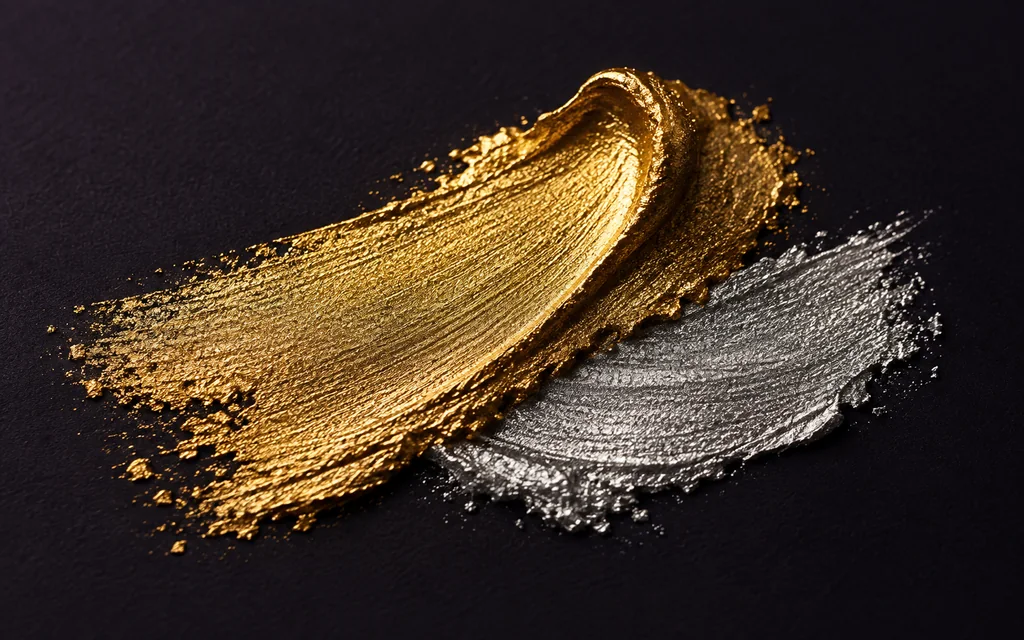
Concept application artwork; not product packaging.
Ready-to-print metallic inks with excellent brilliance and low tack, particularly suited to coated paper and board.
Colour range and resistance
| Colour | Product code | Lightfastness | Alkali resistance | Nitro solvent resistance | Alcohol resistance |
|---|---|---|---|---|---|
| Pantone 871 | 19/OS/1010 | 8 | No | Yes | Yes |
| Pantone 872 | 19/OS/1027 | 8 | No | Yes | Yes |
| Pantone 873 | 19/OS/1030 | 8 | No | Yes | Yes |
| Pantone 874 | 19/OS/1028 | 8 | No | Yes | Yes |
| Pantone 875 | 19/OS/1029 | 8 | No | Yes | Yes |
| Pantone 876 | 19/OS/1031 | 8 | No | Yes | Yes |
| Pantone 877 | 17/OS/1013 | 8 | No | Yes | Yes |
Lightfastness is rated from 1 (poor) to 8 (excellent). Resistance values are recorded as Yes or No.
Features
- Excellent metallic brilliance.
- Low tack and resistance to dot gain.
- Ready to print without additives.
- Controlled drying performance.
Substrates
Best suited to coated paper and board. Brilliance is reduced on absorbent papers as the ink penetrates the substrate.
Usage instructions
- A primer can improve print quality.
- Use the lowest practical cylinder pressure to support ink transfer and metallic brilliance.
- In multicolour printing, print metallic ink last because of its lower tack.
- Metallic pigments have lower abrasion resistance. An overprint varnish improves rub resistance but may reduce brilliance.
- In silver ink, fountain solution can react with aluminium particles and generate gas.
Packaging
1 kg tins.
Storage
- Recommended storage temperature: 25 °C. Heat accelerates oxidation and reduces brilliance.
- Use gold inks within one year and silver inks within six months.
- Keep containers tightly closed to limit oxidation.
For pricing, availability and technical advice, send our sales team the product name, quantity and details of your printing application.
Technical advice & pricing ↗